
Elevator Service Company Sales and Acquisitions
Elevator service companies sell on a multiple of adjusted EBITDA, and buyers price the maintenance book first: units under contract, the monthly revenue they bring, and the repair and modernization work that follows. Manufacturers, private equity backed platforms and public multi-trade companies are all buying independents. GrowPCG is an M&A advisory firm that runs confidential sales for founder-led elevator service owners and finds off-market acquisitions for buyers.

Elevator service M&A in three numbers
Each figure is labeled by type because the types measure different things. Full sources are at the end of the page.
Selling in the next few years?
Book a confidential call →Why do buyers want elevator service companies?
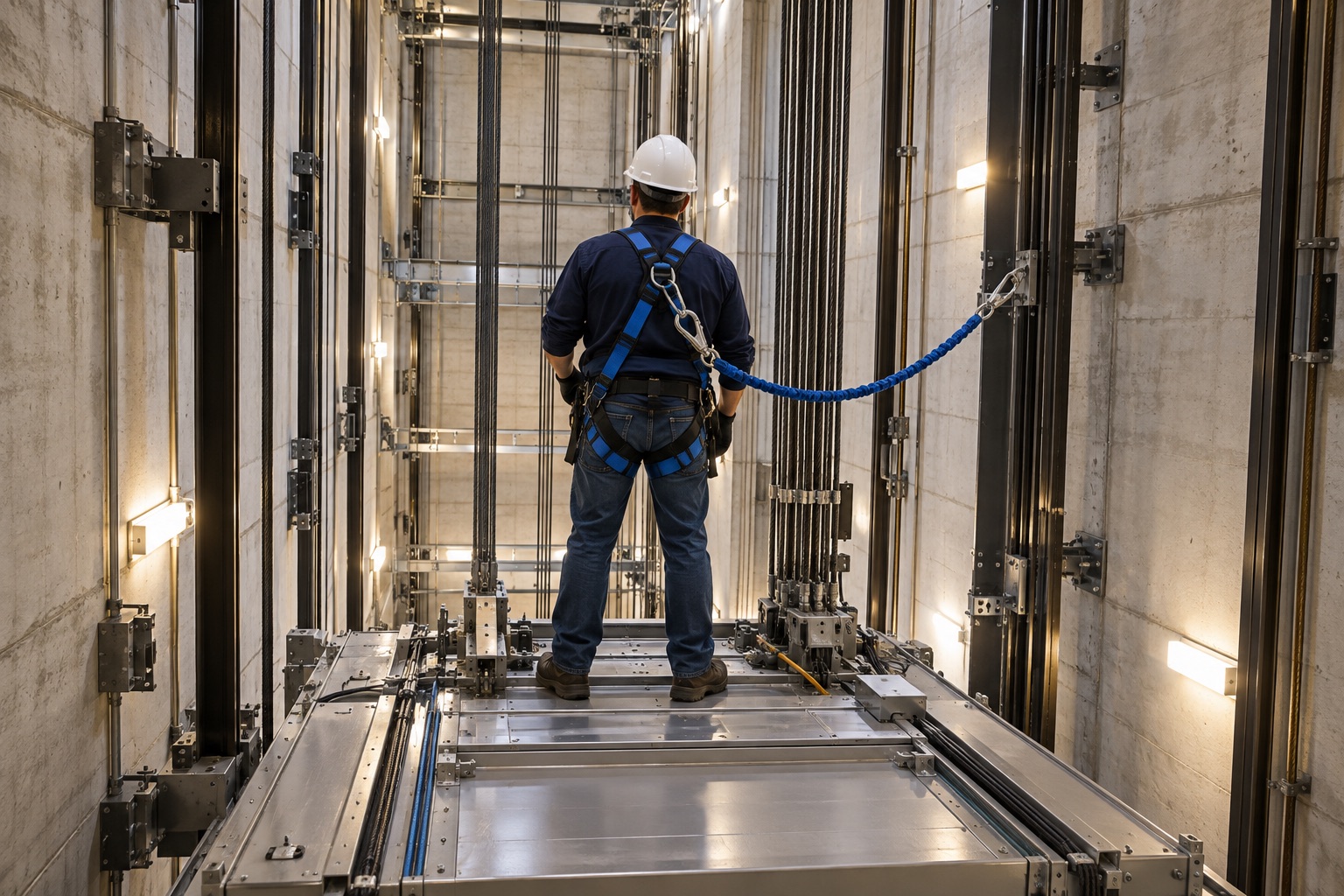
The work is required and it repeats. Under ASME A17.1, as the City of Phoenix summarizes it, elevators need a Category 1 test every year, traction elevators need a Category 5 test once every five years, and firefighters' emergency operation is tested monthly with a log kept on site. In Texas, a building owner must obtain an inspection every 12 months to hold a Certificate of Compliance.
Service work also holds up when construction slows. At Otis, one of the four big elevator manufacturers, service sales grew in 2025 while new equipment sales fell.
What does a buyer look at first?
Units under contract
Expect a buyer to ask for your unit list: each building, the brand and type of each unit, its monthly maintenance charge and its renewal date. From that list, the buyer works out how much repair and modernization work your maintenance base brings in and how dense your routes are.
Contract terms
Buyers read term length, auto-renewal, cancellation and penalty provisions, and your renewal and retention rate. How a contract handles assignment and a change of control decides how much of the book survives a new owner.
Brands you can service
Buyers ask what share of your units runs on proprietary equipment you cannot fully service or get parts for. H.I.G. Capital's new EverRise Lift Group says it "will continue to utilize non-proprietary elevator equipment." APi Group described Elevated Facility Services Group, the company it bought in 2024, as serving "all major brands of elevator and escalator equipment."
The mechanic bench
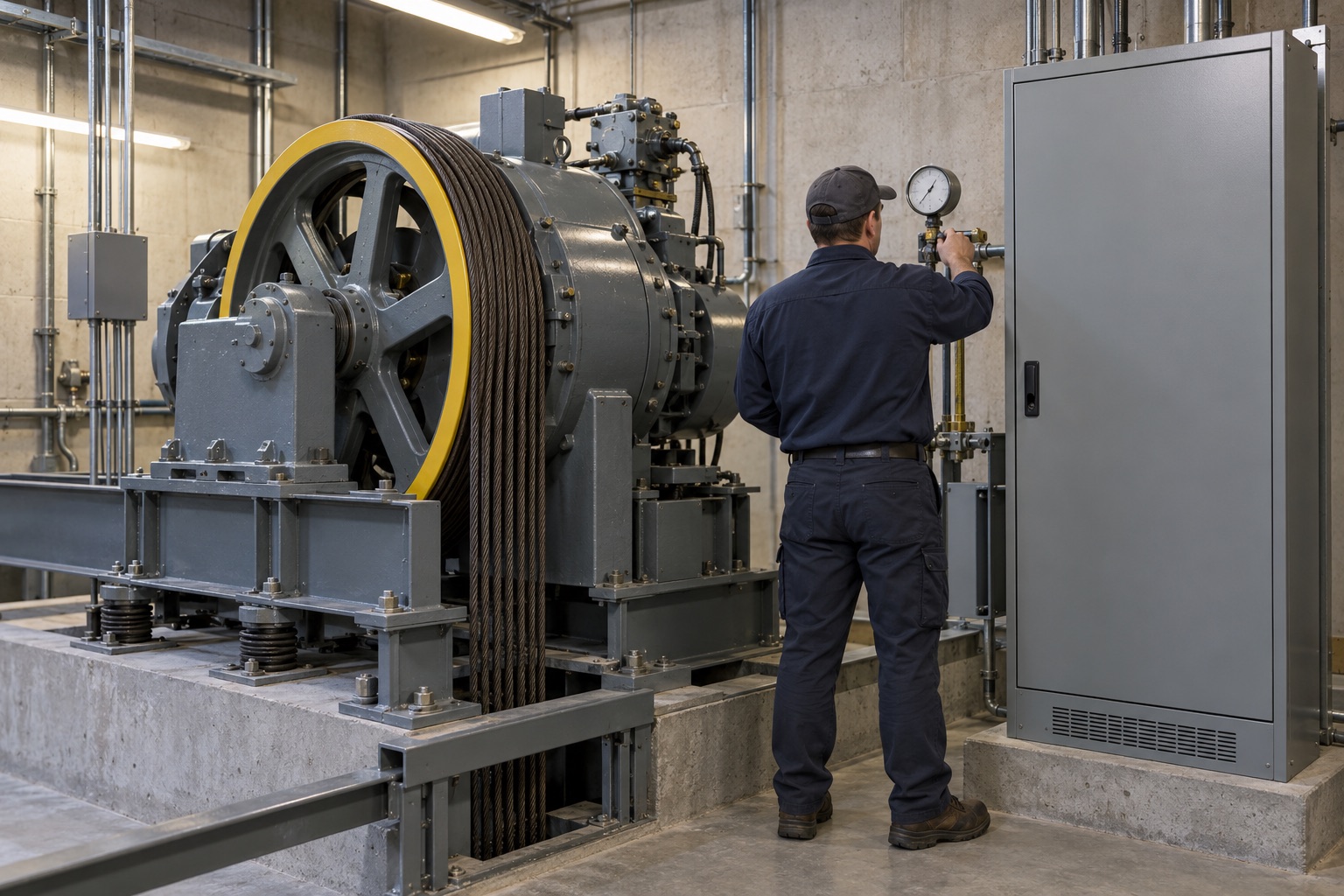
The workforce is small and licensed. Elevator and escalator installers and repairers held about 24,700 jobs in 2025, according to the Bureau of Labor Statistics. Most states require them to be licensed, and nearly all learn the work through an apprenticeship. They may be on call 24 hours a day, so buyers count licensed mechanics, apprentices and on-call coverage.
Union status
Whether your mechanics belong to the IUEC, the International Union of Elevator Constructors, changes your labor cost and work rules. It also shapes which buyers fit. Under the 2022 to 2027 agreement between the National Elevator Bargaining Association and the IUEC, each local's wage and benefit package rises 3.45% to 3.50% a year, and the agreement runs to July 8, 2027.
Licenses and test records
In Texas, anyone who installs, alters, tests, repairs or maintains elevators must register, and each contractor designates one or two responsible parties with at least three years of elevator contractor experience. Buyers also want your test tags and logs, because the code calendar shows when recurring work falls due.
How much can I sell my elevator business for?
How buyers value an elevator service company comes down to how much of its earnings they can count on once you step back. They price it on a multiple of adjusted EBITDA: earnings before interest, taxes, depreciation and amortization, with one-time and owner-specific costs added back. Maintenance contracts that renew, a service manager who runs the routes and mechanics who hold their own licenses earn a higher multiple. New installation work, which rises and falls with construction, earns a lower one, and so does a shop that runs through its owner. No recognized source publishes prices for elevator companies alone. APi Group, a public company that buys elevator service companies, has said what it pays. On its October 2026 earnings call, its chief executive said the average it pays for an add-on, a smaller company that fits closely with a business it already owns, has stayed at 5 to 6 times EBITDA. That average covers all of APi's add-ons, fire protection and security companies included, not elevator companies alone. The ranges below are our view, based on a data collection that includes Stanford, Pepperdine, publicly disclosed deals and the Axial platform.
- Under $500,000 of EBITDA. Most sell for 2x to 4x. Elevator companies this size are often owner-run: the owner sells the contracts, is the responsible party on the license and takes the after-hours calls, so a buyer prices in the cost of replacing the owner in each of those roles.
- $500,000 to $1 million. Most sell for 3x to 4.5x, and the best reach 5x. A few licensed mechanics run the routes, but you still sell the contracts, stay the responsible party on the license and cover the on-call nights. Maintenance contracts that renew without you move the offer toward the top of the range.
- $1 million to $2 million. Most sell for 4x to 6x. A service manager runs the routes and the on-call schedule, a second responsible party is named on the license, and the contracts renew on paper a buyer can take over. A buyer can step in without the owner and grow from there.
- Over $2 million. Most sell for 4x to 6x, and larger companies with a strong book of recurring maintenance contracts can draw a premium above 6x. A company this size has dense routes in a metro, services every major brand, and its maintenance base feeds a pipeline of modernization work. A manufacturer could use it to anchor a region, and so could a platform, a company a private equity fund builds by buying independents. Companies that lean on new installation tend to sell toward the low end.
Buyers make assumptions from EBITDA. A larger elevator company generally needs its owner less, holds more contracts across more buildings, has more licensed mechanics and tracks its work in better systems, so it is less risky to take over.
An independent with a strong maintenance book can draw manufacturers, platforms, public multi-trade companies and larger independents. Each of them sees something different in it. A buyer with routes in your metro gains density, more units for the mechanics it already has there, while a buyer new to the metro gains a starting base. Price follows that fit: how much a given buyer gains from owning the company. Double-digit multiples in elevator service usually go to very large companies with routes across many metros.
Not sure where your company lands?
Book a confidential callWill my maintenance contracts transfer to the new owner?
Most of the answer sits in each contract's assignment and change-of-control language, and in how the deal is built. A stock sale keeps the same company on the contracts. An asset sale moves each contract to the buyer, which some customers must approve. Buyers price that risk, so a contract list with assignment terms, renewal dates and retention history is worth assembling before you go to market. Your attorney can tell you what each contract allows. We are happy to help you put that list together and read it the way a buyer will.
Should I sell to a manufacturer or to an independent platform?
It depends on what you want for your mechanics, your brand and your customers. A manufacturer makes its own equipment, so ask what happens to your name and to the other brands you service. A platform buys independents to build a larger company, so ask how much say you keep. Ascend Safety Collective, for one, says the regional businesses it partners with stay independent while gaining access to capital. Hear from both kinds of buyer before you choose.
What does the KONE and TKE deal mean for independent elevator companies?
KONE agreed in April 2026 to combine with TK Elevator, with completion expected in the second quarter of 2027 at the earliest. KONE says the price would adjust for any divestments of either company's business that regulators require. Lerch Bates, an elevator consulting firm, calls it a move that potentially further concentrates the market among a small number of dominant manufacturers. Whether that pushes customers or mechanics toward independents is not yet known.
Who is buying elevator companies?
Private equity
Private equity firms have formed platforms that buy independent elevator companies. They look for units under maintenance contract, licensed mechanics and managers who stay.
Strategic buyers
Elevator manufacturers buy independents for their units under contract and the mechanics who service them. Public safety services companies buy for inspection, service and repair work.
Search funds and family offices
A searcher is an operator who raises money to buy and run one company. A family office is a wealthy family's own firm for buying and holding businesses. Monthly maintenance contracts suit both.
Larger independents
A larger independent buys a smaller one to add units under contract and licensed mechanics in its own metro, or to enter a new one. It knows the equipment, so its questions come fast.
What are some recent elevator deals?
The four big manufacturers are Otis, KONE, Schindler and TK Elevator.
- Otis bought eight Urban Elevator locations in 2025.
- H.I.G. Capital formed EverRise Lift Group, which is pursuing add-ons, in September 2026.
- Altaline Capital Management and Haven Capital Partners launched Ascend Safety Collective in May 2026.
- APi Group entered elevator service by buying Elevated, which drew about 70% of its revenue from inspections, service and repair, and closed its first add-on in that business in the second quarter of 2026.
- Elevator Service Inc. bought American Elevator of Oklahoma City in June 2025.
Two ways to sell with GrowPCG
GrowPCG runs both sell-side and buy-side engagements. We represent owners who want to sell, and we represent buyers looking for companies to acquire.
We run your sale
This is how a sell-side process runs, from the first call through closing.
- A confidential first callNo paperwork and no obligation. We ask what you want from a sale and when.
- A readiness look and data reviewWe go through your numbers and operations the way a buyer will, and show you where the soft spots are.
- Getting ready to sellOur team guides the preparation before buyers see anything. Your CPA prepares the financials, and we tell them what buyers will need.
- Going to marketOnce we represent you, we build the materials and take them to our network of buyers. Buyers first see a profile that does not name you, and your name comes out only under an NDA.
- Running the processWe vet buyers as they come in, so your time goes to the ones that best fit your goals.
- Negotiating the dealWe help you compare offers and negotiate terms, alongside your attorney and CPA.
- Diligence and closingWe manage the buyer's requests and the calendar through closing, so the business keeps running.
Most sales in the lower middle market take 6 to 12 months from going to market to closing. Our exit readiness guide covers the preparation in detail.
A private introduction
We also represent buyers looking for companies like yours. If one of them fits what you want, we can set up a private, one-to-one conversation, with no listing and no marketing. That buyer retains us and pays our fee, so there is no cost to you. Your name goes to the buyer only under an NDA.
Buying an elevator company?
Building an elevator service platform, or adding units in a new metro? We find owners of independent elevator companies who are not running a sale and would consider one. Tell us the markets, unit counts, union status, equipment mix and deal structure you want. We contact the owner, confirm interest and send you an anonymous profile, and the name comes once you sign an NDA. Teasers from our sell-side engagements also reach registered buyers.
Questions elevator company owners ask us
How much can I sell my elevator business for?
There is no published price list for elevator companies alone, so start from the ranges above. Most companies sell for 2x to 4x adjusted EBITDA below $500,000 and 4x to 6x above $1 million. Within its range, an elevator company lands where its maintenance book, the mechanics who stay and its fit with the buyer's routes put it.
Will I get the whole price at closing?
Not always. A buyer unsure how many maintenance contracts will stay after the sale may hold back part of the price, or pay it later through an earnout, money paid after closing if targets such as contract retention are met. A platform may also ask you to take part of the price as rollover equity, a stake in its company that pays out when that company is sold. You are free to say no to rollover: it is a frequent ask, but selling does not depend on it. Compare what each offer pays at closing, and what the rest depends on, before you compare headline numbers.
What happens to my mechanics and our union contract if I sell?
Virtually any buyer will do all it can to keep your mechanics with the business. Some have said so in public: TK Elevator offered all of Albany Elevator's employees positions, and all of American Elevator's employees joined ESI. A union buyer and a non-union buyer will read your bench differently, so ask each one how it would handle your labor agreement. Ask about pay, benefits and on-call coverage too, before you sign a letter of intent.
Does my elevator contractor license transfer when I sell?
That turns on your state's rules and on whose name the registration carries. Texas, for one, ties each contractor's registration to named responsible parties. If you are the only one, a buyer needs another qualified person named, or you stay on in the role for a time. Your state agency and your attorney can tell you how it moves in your deal. If you are unsure who would fill that role after the sale, get in touch and we can talk it through with you while you prepare.
How long does it take to sell an elevator company?
An elevator company sale usually closes 6 to 12 months after it goes to market. Diligence runs through the maintenance book, with the buyer checking each contract against your unit counts by brand and your test records. Having those and your mechanic roster ready before you start keeps the sale moving.
How is GrowPCG paid?
When we run your sale, we are paid a success fee at closing. On a private introduction, the buyer pays our fee. Either way, we are paid only when a deal closes.
- City of Phoenix, elevator testing requirements (PDF), September 2025. Checked 2026-10-16.
- Texas Department of Licensing and Regulation, "Elevators, Escalators and Related Equipment FAQ", current page. Checked 2026-10-16.
- Otis, fourth-quarter and full-year 2025 results (PDF), January 2026. Checked 2026-10-16.
- APi Group, release on completing the Elevated acquisition (exhibit 99.1), June 2024. Checked 2026-10-16.
- APi Group, release on the Elevated agreement (exhibit 99.1), April 2024. Checked 2026-10-16.
- H.I.G. Capital, release on the formation of EverRise Lift Group, September 2026. Checked 2026-10-16.
- U.S. Bureau of Labor Statistics, "Elevator and Escalator Installers and Repairers," Occupational Outlook Handbook, October 2026. Checked 2026-11-17.
- NEBA and IUEC, "2022-2027 Agreement" (PDF), July 2022. Checked 2026-10-16.
- TK Elevator, "KONE and TKE to combine", April 2026, and "TKE Acquires Albany Elevator", May 2021. Checked 2026-10-16.
- KONE, "KONE and TKE to combine", April 2026. Checked 2026-10-16.
- Lerch Bates, "The Changing Landscape of the Elevator Industry", June 2026. Checked 2026-11-14.
- Otis, "Otis Acquires Eight Urban Elevator Locations Across the U.S.", April 2025. Checked 2026-11-14.
- Altaline and Haven Capital Partners, Business Wire release via FinancialContent, "Altaline Launches Ascend Safety Collective, a Newly-Formed Elevator Services Platform", May 2026. Checked 2026-11-14.
- Elevator Service Inc., "ESI Acquires American Elevator", June 2025. Checked 2026-10-16.
- APi Group, second-quarter 2026 earnings call, corrected transcript (PDF), July 2026. Checked 2026-11-14.
- APi Group, third-quarter 2026 earnings call, corrected transcript (PDF), October 2026. Checked 2026-11-14.
- Axial, "What Are Businesses Selling For? Valuation Multiples by Company Size, Sector & Buyer Type", September 2026. Checked 2026-11-14.
- Stanford Graduate School of Business, article on its 2026 Search Fund Study, July 2026. Checked 2026-11-19.
- Pepperdine Graziadio Business School, Private Capital Markets Reports, 2025 and 2026, 2026. Checked 2026-11-19.
Advisor estimates are opinions published by those firms, not transaction data.
Thinking about selling?
Start with a call. Every conversation is confidential, and there is no obligation.
Looking to buy?
Join the buyer network to receive teasers from our listings and notice of new opportunities.
