
Landscaping and Lawn Care Business Sales and Acquisitions
Landscaping and lawn care companies sell on a multiple of adjusted EBITDA, and buyers pay more for recurring maintenance than for design-build and installation projects. Commercial maintenance platforms, lawn care consolidators, pest control companies and tree care companies each buy a different part of the trade. GrowPCG is an M&A advisory firm that runs confidential sales for founder-led landscaping and lawn care owners and finds off-market acquisitions for buyers.


Landscaping M&A in three numbers
Each figure is labeled by type because the types measure different things. Full sources are at the end of the page.
Selling in the next few years?
Book a confidential call →Why do buyers want landscaping companies?
Landscaping is a big trade with no dominant owner. IBISWorld counts more than half a million landscaping businesses in the U.S., and most are small. That leaves room for platforms: companies, often owned by private equity funds, that grow by buying smaller ones.
The work comes back every season. Office parks, homeowners associations and homeowners pay for mowing, pruning and turf care year after year, and a book of maintenance customers brings in next year's revenue without a new sale.
What does a buyer look at first?
Your service mix
Service mix moves value in this trade more than anything else. Buyers split your revenue into maintenance, enhancements, design-build, lawn care, tree work and snow, and price each part on its own terms.
Renewal history, not contract length
Many maintenance agreements can be canceled on short notice, so the length of a contract says little. Buyers test what actually happened, property by property: which accounts renewed, which went out to bid and which you lost.
Who your customers are
Associations, property managers, commercial owners and homeowners carry different risk. If one management company or association makes up more than 15 to 20 percent of revenue, expect detailed questions about that relationship.
Your crews and certifications
Buyers ask how long your foremen have stayed and who holds the pesticide and fertilizer certifications. If that person is you, the buyer has a gap to fill before closing.
How much can I sell my landscaping business for?
How buyers value a landscaping business comes down to how much of next year's work they can count on, and how much of the company runs without you. They price it on a multiple of adjusted EBITDA: earnings before interest, taxes, depreciation and amortization, with one-time costs and the owner's personal expenses added back. Maintenance and lawn care programs that come back every season earn a higher multiple than design-build projects or snow billed by the storm. The ranges below are our view, based on a data collection that includes Stanford, Pepperdine, publicly disclosed deals and the Axial platform.
- Under $500,000 of EBITDA. Most sell for 2x to 4x. Landscaping companies this size are often owner-run: you bid the accounts, set the crew schedule and hold the pesticide or fertilizer certification, so a buyer prices in replacing you.
- $500,000 to $1 million. Most sell for 3x to 4.5x, and the best reach 5x. Foremen run the crews and someone in the office handles billing, but you still bid and keep the property accounts and hold the certifications. Maintenance contracts that come back every season move the offer toward the top of the range.
- $1 million to $2 million. Most sell for 4x to 6x. Account managers own the property relationships and sell the enhancements, foremen run the crews without you on site, and a second person holds the certifications. A buyer can take over the accounts without losing them.
- Over $2 million. Most sell for 4x to 6x, and larger companies with strong recurring maintenance revenue can draw a premium above 6x. A company this size has more than one branch or a dense book in one metro, accounts with years of renewals and managers who would stay. Companies built on design-build projects or snow billed by the storm tend to sell toward the low end.
Buyers size up risk by EBITDA. Larger landscaping companies tend to depend less on the owner and to have more accounts, crews and managers, and better systems.
Private equity backed platforms, in commercial maintenance and in lawn care, are the deepest pool of buyers in this trade. Fit drives much of the price. A buyer with crews near your properties gains density, more stops for the same trucks and drive time, so it sees more in your accounts than a buyer with no crews nearby. The double-digit multiples owners hear about are usually paid for very large companies with maintenance branches across many states.
Not sure where your company lands?
Book a confidential callDo buyers pay the same for maintenance, design-build, lawn care, tree and snow?
No. Each line draws its own buyers and its own math.
Maintenance
Recurring commercial and association maintenance is what most platforms want. Bland Landscaping, which built its platform with Comvest Private Equity, says it buys companies focused on commercial landscape management with recurring commercial revenue.
Design-build and installation
Project work has to be won again every year, so buyers value it below maintenance. A buyer that wants to sell enhancements to its maintenance customers may still pay well for a strong design team.
Lawn care
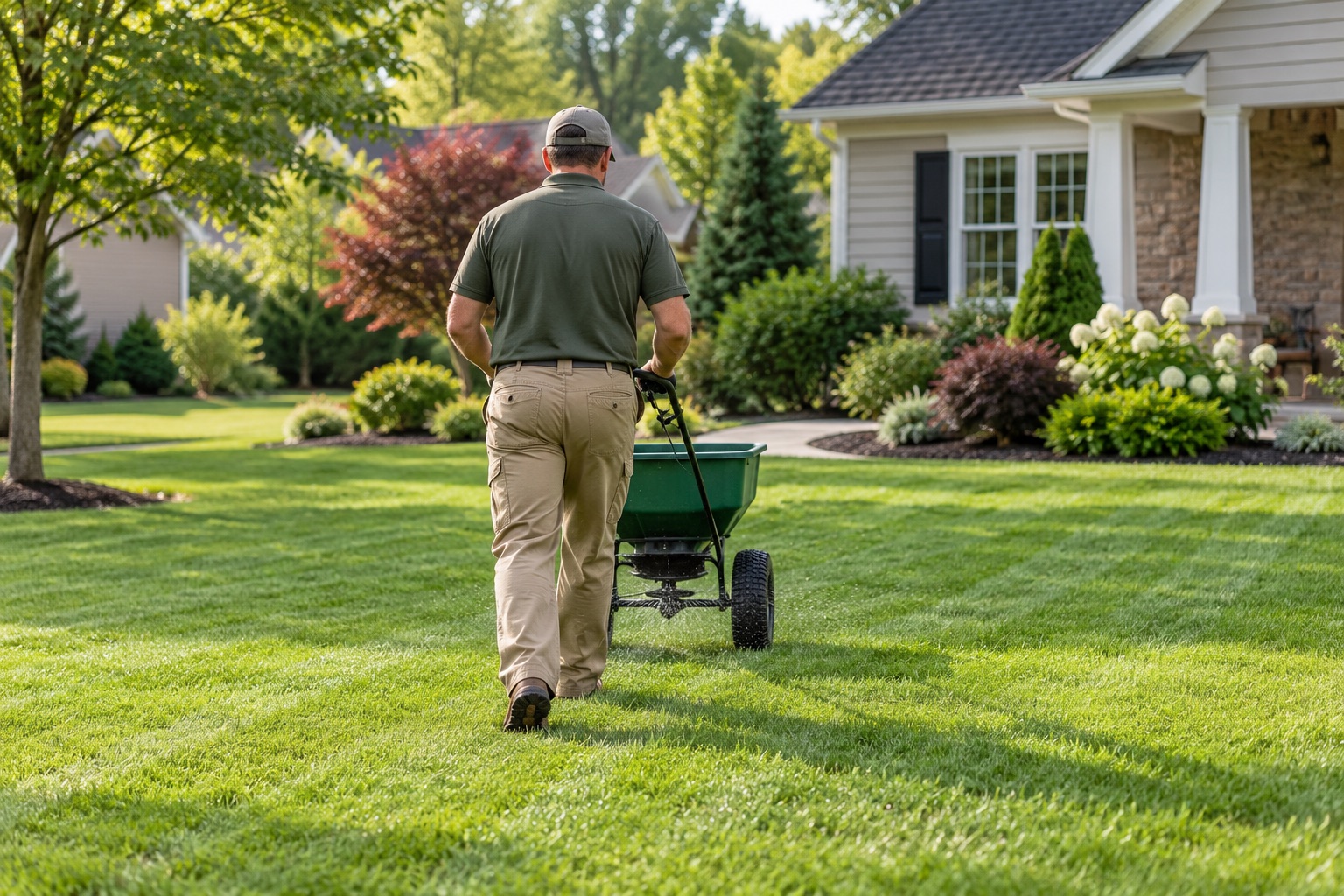
Fertilization and weed control run on routes, and lawn care consolidators buy for density. When Wind Point Partners combined Turf Masters with ExperiGreen in December 2025, the merged company served nearly 400,000 residential customers.
Tree care
Tree work brings its own equipment, insurance and safety record, so it draws its own buyers, often larger tree care companies that look hard at all three.
Snow
Snow revenue swings with the weather, so buyers average it over several winters instead of paying for your best one. BrightView guides its own snow revenue to roughly a five-year average and sells part of its snow book on fixed fees with guaranteed minimum payments, whatever the season's snowfall.
What should I do when a private equity platform calls?
Take the call. Private equity has a mixed name among landscapers: a new owner changes too much in one season, and the foremen and account managers who built the company leave. It happens. So does the reverse: a partner pays for what one owner cannot, such as routing software, a recruiter and a path from crew leader to branch manager. The money is only part of an offer.
Platforms are not all alike, and many look after the crews and the owner who sold. We vet buyers before you meet them: what each one intends, what changed at the last company it bought, who still works there, and its plan for yours. The poor fits stop there. Sign a confidentiality agreement, or NDA, before you share numbers or customer names. Compare offers on cash at closing first. Platforms often want a founder to stay, with the role open to discussion, and to take part of the price as rollover equity, a stake in the platform that pays out when the platform is sold. Rollover is a common ask, but it is not a must, and how much you roll is open to negotiation. Some pay part of the price later as an earnout, only if the company hits agreed targets.
Do buyers care if my crews are on H-2B visas?
Yes. Landscaping and groundskeeping workers held nearly half of the H-2B positions the Labor Department certified in fiscal 2026 through June. The cap is tight: USCIS had enough petitions to meet it for the first half of fiscal 2027 by Sept. 4, 2026, and a company that misses the window can start a season short.
Buyers ask how many seats depend on visas, how long you have used the program and whether the Labor Department has ever found a violation. Under the H-2B rules, a successor in interest, such as a company that takes over yours, can in certain circumstances be held liable for a violating employer's obligations, so a buyer wants clean records first. Ask your attorney how that applies to your company.
What happens to my pesticide and fertilizer licenses when I sell?
It depends on your state, and it comes up early. Lawn treatments usually run under a state license or certificate held by a named person, so a buyer asks who that is and whether they will stay. In Florida, for example, lawn and ornamental pest control is one of the state's pest control certificate categories, a licensed pest control business needs a certified operator in charge who works full time for it, and anyone applying commercial fertilizer to an urban landscape must be certified. Your attorney can explain how a sale affects each license where you work. We can show you what buyers check on each one as you prepare.
Who is buying landscaping companies?
Private equity
Private equity backed platforms buy maintenance companies to add branches and density near their crews, and lawn care consolidators buy fertilization and weed control routes. The platforms get bought and sold too.
Strategic buyers
Buyers differ by service line. Pest control companies that already treat lawns, and hold the certifications to do it, buy lawn care books. Larger tree care companies buy tree businesses for their crews and equipment.
Search funds and family offices
These buyers want one good company more than a string of them. A search fund backs an operator who will run it, and a family office buys with a family's money and keeps it. Contracts that renew each season fit both.
Individual buyers
Smaller owner-run companies often sell to individuals who want to buy one company and run it themselves. They step into your job, so they care most about which accounts renew and which foremen stay.
What are some recent landscaping deals?
Six since September 2025:
- In November, Bartlett Tree Experts bought Reilly Tree and Landscape of Plainville, Massachusetts. Founder Neal Reilly and his team of 20 arborists and plant health care specialists joined Bartlett.
- In June, Osprey Landscape Group, backed by Southfield Capital, bought LandGraphics, a commercial landscape maintenance company in Southern California.
- In April, Ruppert Landscape announced its purchase of Five Seasons Landscape Management, a commercial landscaping and snow removal company in Columbus, Ohio, founded in 1997.
- In January, the Senske Family of Companies, the parent of Emerald Lawns and backed by GTCR, announced its purchase of Greenup Lawn and Shrub Care, a Houston lawn care company founded in 1984.
- In January, TruArc Partners, a private equity firm, bought Schill Grounds Management, a Cleveland commercial landscaper.
- In September 2025, Bland Landscaping bought CSS Landscaping in Jacksonville, Florida.
Two ways to sell with GrowPCG
GrowPCG runs both sell-side and buy-side engagements. We represent owners who want to sell, and we represent buyers looking for companies to acquire.
We run your sale
This is how a sell-side process runs, from the first call through closing.
- A confidential first callNo paperwork and no obligation. We ask what you want from a sale and when.
- A readiness look and data reviewWe go through your numbers and operations the way a buyer will, and show you where the soft spots are.
- Getting ready to sellOur team guides the preparation before buyers see anything. Your CPA prepares the financials, and we tell them what buyers will need.
- Going to marketOnce we represent you, we build the materials and take them to our network of buyers. Buyers first see a profile that does not name you, and your name comes out only under an NDA.
- Running the processWe vet buyers as they come in, so your time goes to the ones that best fit your goals.
- Negotiating the dealWe help you compare offers and negotiate terms, alongside your attorney and CPA.
- Diligence and closingWe manage the buyer's requests and the calendar through closing, so the business keeps running.
Most sales in the lower middle market take 6 to 12 months from going to market to closing. Our exit readiness guide covers the preparation in detail.
A private introduction
We also represent buyers looking for companies like yours. If one of them fits what you want, we can set up a private, one-to-one conversation, with no listing and no marketing. That buyer retains us and pays our fee, so there is no cost to you. Your name goes to the buyer only under an NDA.
Buying a landscaping company?
If you are building a landscaping or lawn care platform, we find owners who are not on the market but would consider a sale. We start from your criteria: the service lines you want, the markets you serve, deal size and structure, and what you will not take on, such as a snow-heavy or install-heavy book. We make the approach, qualify the owner's interest and send a blind profile, and the company's name follows a signed NDA. Registered buyers also receive teasers from our sell-side engagements.
Questions landscaping owners ask us
How much can I sell my landscaping business for?
Start with your adjusted EBITDA for the last three seasons and ask how much of it would hold if you stepped back. Accounts that renew year after year and an account manager the property managers already call support a higher multiple. A book that runs through your phone supports a lower one, and how well your accounts fit a buyer's routes sets the rest.
How much can I sell my lawn care business for?
Lawn care here means fertilization and weed control programs run on routes, not mowing. Buyers use adjusted EBITDA for it too, then test it against your customer file: how many customers renewed their program this year, how tightly they sit on your routes and who holds the pesticide certification. Customers who come back each spring on routes a buyer can fold into its own are worth more than the same revenue spread thin.
What happens to my crews after I sell?
Virtually any buyer will do all it can to keep your crews after the sale, because it is paying for them as much as for your contracts. Ask each buyer how it would handle pay, routes and equipment, who your managers would report to, and what happens to seasonal and visa workers. Settle those points before you sign a letter of intent.
When should I tell my crews and managers I'm selling?
Not until the purchase agreement is signed, at the earliest. Your account managers and foremen carry the property relationships, and word of a sale in midseason can walk good accounts to a competitor. Before anyone is told, check what your customer agreements say about a change of ownership, and work out with the buyer how and when the team and the accounts hear, as part of the transition plan.
How long does it take to sell a landscaping business?
Most landscaping sales close 6 to 12 months after they go to market, so time the start around your season. Going to market in the fall gives a buyer a full spring and summer of results and keeps diligence out of your busiest months. Starting a year or two ahead leaves time to put renewals on paper and hand the schedule to a manager.
How is GrowPCG paid?
When we run your sale, we are paid a success fee at closing. On a private introduction, the buyer pays our fee. Either way, we are paid only when a deal closes.
- IBISWorld, "Landscaping Services in the US Industry Analysis, 2026", May 2026. Checked 2026-10-16.
- TruArc Partners release via SIMA, "TruArc Partners Acquires Schill Grounds Management", January 2026. Checked 2026-10-16.
- Wind Point Partners, "Wind Point Partners Combines Turf Masters with Portfolio Company ExperiGreen", December 2025. Checked 2026-10-16.
- Bland Landscaping, "Bland Landscaping Acquires CSS Landscaping", October 2025. Checked 2026-10-16.
- Bland Landscaping, "Mergers and Acquisitions", undated. Checked 2026-10-16.
- BrightView Holdings, "Fiscal 2025 results" (exhibit 99.1), November 2025. Checked 2026-10-16.
- U.S. Department of Labor, "H-2B Selected Statistics, FY 2026 Q3", data as of June 2026. Checked 2026-10-16.
- USCIS, "H-2B Temporary Non-Agricultural Workers", September 2026. Checked 2026-10-16.
- 20 CFR 655.5, "Definition of terms" (Cornell LII copy), current text. Checked 2026-10-16.
- Florida Statutes, "Section 482.111, Pest control operator's certificate", 2026. Checked 2026-10-16.
- Florida Statutes, "Section 482.152, Duties of certified operator in charge", 2026. Checked 2026-10-16.
- Florida Statutes, "Section 482.1562, Limited certification for urban landscape commercial fertilizer application", 2026. Checked 2026-10-16.
- Axial, "What Are Businesses Selling For? Valuation Multiples by Company Size, Sector & Buyer Type", September 2026. Checked 2026-11-14.
- Landscape Management, "Bartlett Tree Experts expands Massachusetts footprint with Reilly Tree and Landscape acquisition", November 2026, and Bartlett Tree Experts, "Bartlett Acquires Reilly Tree and Landscape in Massachusetts", November 2026. Checked 2026-11-17.
- Osprey Landscape Group, "Osprey Landscape Group Expands into California with Acquisition of LandGraphics" (PR Newswire), June 2026. Checked 2026-11-17.
- Ruppert Landscape, "Ruppert Landscape Enters Ohio Market with Acquisition of Five Seasons Landscape Management", April 2026. Checked 2026-11-17.
- Senske Family of Companies, "Emerald Lawns and The Senske Family of Companies Acquires Greenup Lawn and Shrub Care, Expanding Houston Presence" (PR Newswire), January 2026. Checked 2026-11-17.
- IBISWorld, "Landscaping Services in the US: Market Size", 2026. Checked 2026-11-17.
- U.S. Bureau of Labor Statistics, "Grounds Maintenance Workers," Occupational Outlook Handbook, September 2026. Checked 2026-11-17.
- Stanford Graduate School of Business, article on its 2026 Search Fund Study, July 2026. Checked 2026-11-19.
- Pepperdine Graziadio Business School, Private Capital Markets Reports, 2025 and 2026, 2026. Checked 2026-11-19.
Advisor estimates are opinions published by those firms, not transaction data.
Thinking about selling?
Start with a call. Every conversation is confidential, and there is no obligation.
Looking to buy?
Join the buyer network to receive teasers from our listings and notice of new opportunities.
